
 EN
EN TH
TH CN
CN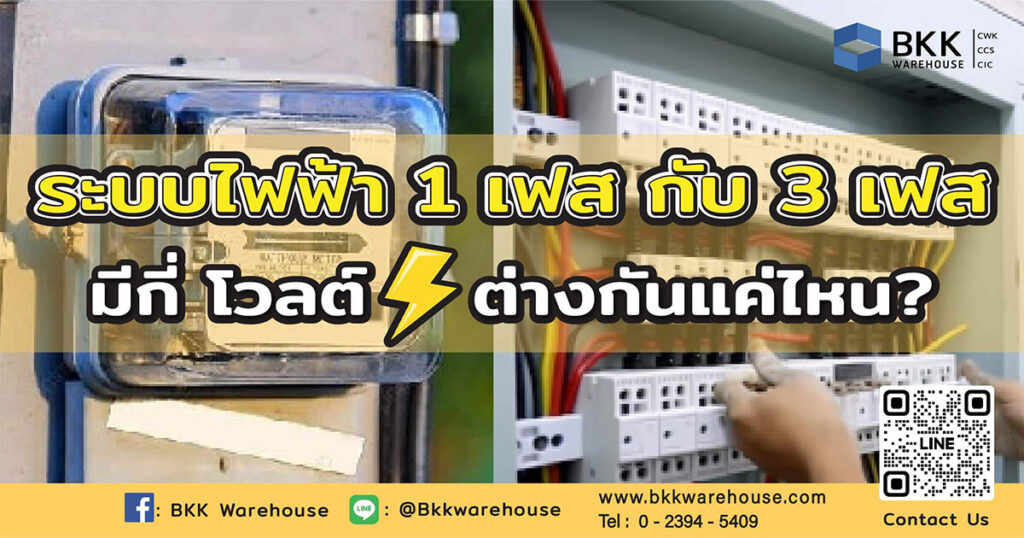
Have you ever wondered about the difference between 1-phase and 3-phase electrical systems? And which one should you use to ensure a stable and sufficient power supply for your building, home, or business, avoiding common problems like brownouts, blackouts, and transformer explosions? These issues significantly impact our daily lives when electricity is unavailable.
Currently, industrial factories and warehouses have different electrical design requirements compared to typical households. Electrical systems in industrial settings are designed to handle higher voltages and typically utilize 3-phase power. This is because buildings or factories have more extensive wiring throughout the structure than the 1-phase systems commonly used in homes. How many volts does each phase carry? How do these systems work? This article has the answers.
Single-Phase Power System

Single-phase electrical system usage
Single-phase electricity is the electrical system commonly used in households and residential buildings. Most household lighting and appliances use a 2-wire, single-phase AC system. Single-phase electricity has a voltage of 220 volts, making installation and equipment costs relatively low.
Voltage
In most countries, single-phase electrical systems have a voltage of 120 volts or 230 volts and a frequency of 50 Hz, depending on the region. The process of a single-phase power system is such that the electric power is transmitted using two wires: a “live wire” (or “phase wire” or “hot wire”) and a “neutral wire”. The live wire carries the alternating current (AC) from the power source, while the neutral wire provides the return path for the current, enabling the power to be delivered to the destination.
Limitations of 1-Phase Electrical Systems
One limitation of a single-phase electrical system is that it is not suitable for locations that use a large amount of electricity, such as industries that operate machinery or motors requiring high power. In such applications, a three-phase electrical system, which has a higher voltage, is generally used.
Single-phase wiring
A single-phase wiring system consists of two wires: a live wire and a neutral wire.
- One wire is the one through which electric current flows, also known as the “live wire” (or “hot wire,” though the original text translates literally to “current line”). It carries the current to the destination to generate usable energy.
- The other wire is a wire that is installed but does not carry current (under normal operation). It is called the “neutral wire.” As commonly seen in household and residential electrical outlets with two slots, this completes the electrical circuit.
- The third slot, found in three-prong outlets, is for the “ground wire.” This allows electricity to flow to the ground in the event of a fault (electrical leak). (A more idiomatic phrasing of the last part would be: “…allows electricity to flow to ground in case of a short circuit or other electrical fault.”)
Three-Phase Power System
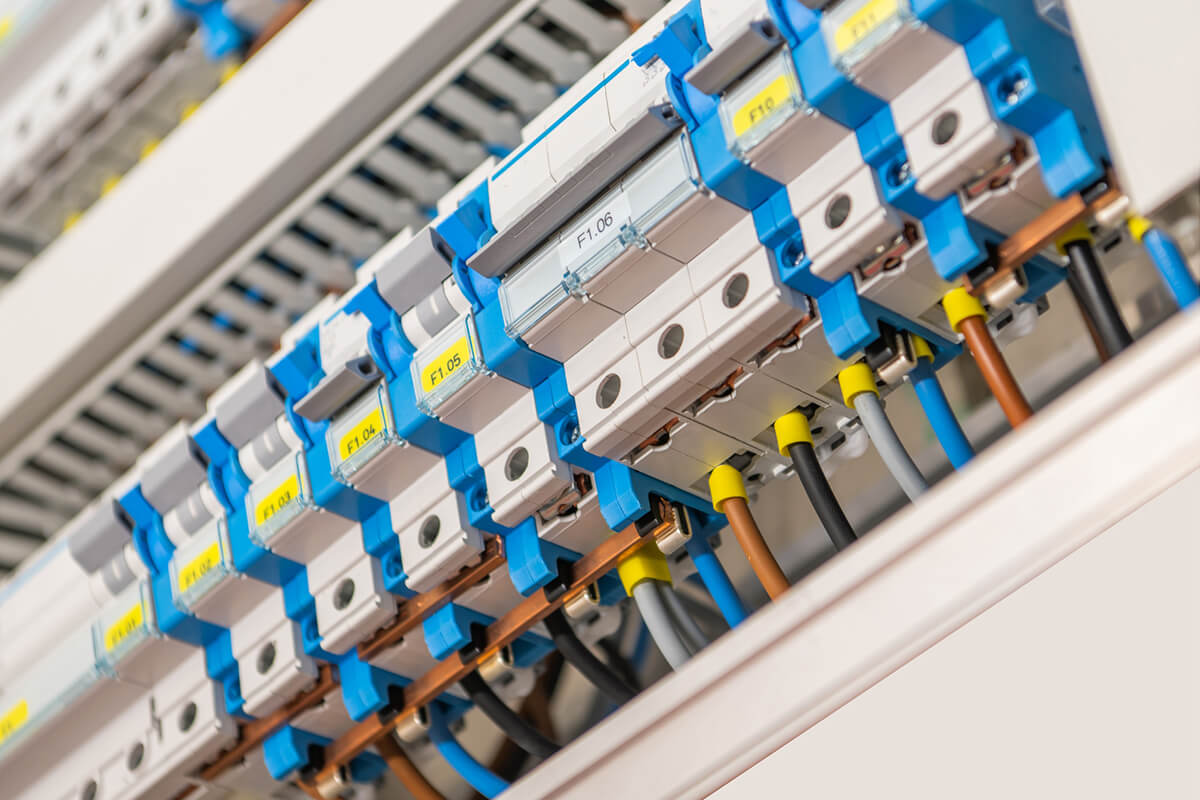
3-Phase Power Systems
This system is suitable for large-scale industries and commercial buildings that require electricity to power factory machinery and industrial construction equipment with high power demands. It can handle higher currents and provides a more stable power supply compared to a single-phase system. Therefore, the 3-phase electrical system is more commonly used in factories and warehouses than in residential settings. It is a cost-effective electrical system for factories and warehouses, although the installation cost is higher due to both installation and electricity deposit fees.
Voltage
In most countries, three-phase electrical systems have a voltage of 208 volts or 480 volts and a frequency of 50 Hz, depending on the region. The operation of a 3-phase electrical system is a form of power supply commonly used in large commercial and industrial settings. It uses a total of 4 wires, consisting of “3 phase conductors” and “1 neutral wire.” The phase conductors carry alternating current (AC) waves that are offset by 120 degrees in a single cycle from the power source, while the neutral wire acts as a return path for the current and distributes power to various points within a building.
3-Phase Power System Limitations
The operating principle of a 3-phase electrical system cannot be directly applied to individual electrical appliances like a 1-phase system. Instead, a 3-phase system is divided into three separate 1-phase systems, which are then distributed to various points where electricity is used. This averages out the electrical load. It can be more complex to install than a 1-phase system because it requires a skilled electrician or electrical engineer with expertise in load balancing to ensure that the phases are properly managed. Only with proper management can the system operate efficiently and consistently.
3-Phase Wiring
A 3-phase wiring system consists of 4 wires: three phase wires and one neutral wire.
- The three phase wires are the ones carrying the electrical current, also known as “current lines” or “hot wires.” They transport electricity to the destination to generate usable power.
- The other wire is installed but carries no current. This is known as the “neutral line” and completes the electrical circuit.
- There’s also another that’s required when installing an electrical system. It will be the part of the “ground wire” (Ground). Allows current to flow to the ground in the event of a fault, Overcurrent. And helps to reduce ground faults. (Ground Fault) that may occur in case of tool. Or the device is damaged. Or malfunction.
In summary, a single-phase system is suitable for residential and small commercial applications, while a 3-phase system is suitable for larger industries and commercial applications that require higher electrical capacity. Both systems have their own advantages and disadvantages. It is important to choose the correct electrical system installation based on the power requirements that residents can assess from the suitability of use in that area. This is for the safety of your life and property.
Recommended articles
What is inventory? Understanding inventory in business operations.
Read the contentMar
What is a distribution center? A key component of modern logistics.
Read the contentMar
What’s a warehouse? Why it matters. Types & Functions explained.
Read the contentFeb
What is purple zone land? Ideal uses and information. Check here!
Read the contentFeb
Land survey fees. Costs, steps, docs. Must-know before land deals.
Read the contentJan
GMP. What is it? Importance, users, and a simple business guide.
Read the contentNov