
 EN
EN TH
TH CN
CN
What is a 3-Phase Transformer? A 3-phase transformer, or “3 Phase Transformer”, is a device that is an important part of a 3-phase electrical system circuit. It has a high electrical capacity and functions to adjust the voltage of a 3-phase alternating current (AC) from one level to another. This enables the use and delivery of electrical power to industries, factories, and large warehouses that consume large amounts of electricity. It helps ensure the smooth operation of motors and machinery without power interruptions, at the appropriate voltage level, and is safe for users within the building.
Operating principle of a 3-phase transformer

A 3-phase transformer operates using mutual inductance, transforming voltage and current from one level to another. Generally, the transformer core has two sets of windings for each phase: the “primary winding,” which receives the electrical voltage, and the “secondary winding,” which delivers the electrical voltage.
When voltage is switched between the windings, it induces a current with the same value and frequency in each phase. The voltage and current are transformed and transmitted from the primary phase lines to the secondary phase lines. This allows for appropriate use in various locations and applications. This ensures the electrical system operates efficiently and safely for industrial factories, warehouses, and large buildings with very high power consumption.
Structure of a 3-Phase Transformer

The structure of a transformer consists of an iron core and coils. Generally, the iron core of a 3-phase transformer is either the core type (Iron Core) or the shell type (Shell Type). It serves as a path for the electromagnetic field and allows the coils to be wound around the iron core.
- Number 1 represents the iron core of a 3-phase transformer, core type (Iron Core). The coils are wound around the iron core, with the primary and secondary windings each wound on half of the core.
- Number 2 represents the iron core of a 3-phase transformer, shell type (Shell Type). The iron core surrounds the coils, with the primary and secondary windings wound on the central leg of the iron core.
Types of 3-Phase Transformers
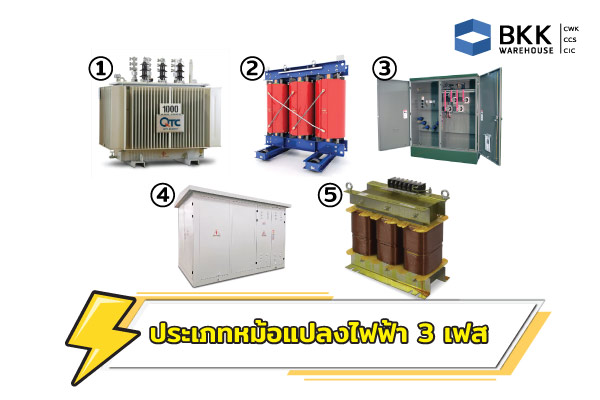
3-phase transformers come in various types based on their purpose and different applications. They are categorized into Step-Up Transformers, which increase voltage, and Step-Down Transformers, which decrease voltage. Here are some common types used in various applications:
- Oil-Immersed Transformer: This type of transformer has an internal oil tank for cooling and enhancing heat dissipation. The oil typically serves as an insulator for the core and magnetic windings. Oil-immersed transformers are commonly used for power distribution in large buildings and factories.
- Dry-Type Transformer: This type does not have oil in a tank. Instead, it uses insulating materials like plastic or ceramics to maintain coolness. Dry-type transformers are often used in locations where safety and maintenance are crucial, such as commercial buildings and factories.
- Pad-Mounted Transformer: This is an electrical system component used to transform voltage levels from high to low. It is usually installed on a ground-level pad or base and is commonly used to supply power to buildings or areas requiring remote power distribution, such as areas where installation is inconvenient, like in ground pits or other types of transformer rooms.
- Unit Substation Transformer: This type of transformer is integrated into a single enclosure along with other equipment, such as circuit breakers. It is an attractive option for applications in locations with limited space.
- Auto-Transformer: This type is used to adjust voltage to a desired level. It has only one magnetic winding and can transform voltage from one level to another.
These transformer types are just a few examples of the 3-phase transformers available. The specific needs and application conditions will determine the suitability for each location.
Operating time of a 3-phase transformer

The operation of a 3-phase transformer can be divided into two main categories:
- Normal Operating Time: 3-phase transformers used to supply electricity in buildings or factories typically have short normal operating times and usually do not stop or enter power-saving mode. This is different from transformers used in substations, which may have longer operating times, depending on the larger power supply. During normal operation, the transformer converts voltage and current to suit the needs of the building’s electrical system to support increased electrical loads or in the event of a power system fault.
- Long-Term Operation: Transformers can operate for long periods, even continuously, without stopping. This long-term operation can be months, years, or even the entire lifespan of the transformer. Transformers used in substations or electrical systems in cities, factories, or hospitals, which require a continuous power supply, have a longer operating time than those used normally. The transformer serves as a crucial device in converting voltage and current to ensure the entire electrical system operates efficiently and stably at all times.
Safety in use or Operational safety

Safety is very important when using 3-phase transformers because transformers are critical to managing electricity in large electrical systems. Therefore, maximum attention should be paid to safety in order to prevent danger and unexpected events. Here are some reasons and steps to ensure the safe use of 3-phase transformers for yourself:
- Check the condition of the transformer: The condition of the transformer should be checked periodically to determine if it is in a safe condition and functioning normally. There should be no frequent signs indicating that the transformer may have problems or deterioration.
- Check the oil level (if using an oil-type transformer): Oil-type transformers must have the correct oil level to ensure efficient cooling and to prevent electrical leaks or other dangerous events.
- Cooling and damage ventilation: The transformer must have a proper cooling system to prevent overheating beyond the permissible limit, and it should be checked that the cooling system is still working efficiently.
- Checking the safety of terminals and safety devices: It is necessary to check that terminals and safety devices, such as switches and control panels, comply with standards and function correctly.
- Preventing unauthorized access: Unauthorized access should be prevented, such as by using keys or a locking system, to prevent access by unauthorized persons.
- Observing unusual events: If there are unusual events, such as oil leaks or loud noises from the transformer, operation should be stopped, and the cause investigated and understood before continuing operation.
Safety in the use of transformers is important to prevent danger and potential risks. Compliance with standards and related recommendations is important to ensure that the electrical system operates stably and safely.
Maintenance of Electrical Transformers

Before starting cleaning, the transformer should be turned off and the power supply should be completely disconnected. The next step is to ensure that the transformer is turned off and the power is disconnected. After that, proceed to clean the exterior and interior of the transformer. After cleaning is complete, check the various components connected to the transformer.
For example, switches and wires, the tightness of screws. Check carefully to make sure there are no damaged parts. In addition, check the oil level (if using an oil-filled transformer) or the operation of the overheat protection system and other protective devices, to maintain performance and extend the life of the transformer.
Choosing the right 3-phase transformer must be considered in accordance with the needs of the electrical system and the environment, such as indoor or outdoor buildings, weather conditions or the environment. If you are unsure about choosing the right transformer for the suitability of your location, you should consult an electrical expert or electrical systems engineer for advice and installation consultation for your industrial building.
Recommended articles
What is inventory? Understanding inventory in business operations.
Read the contentMar
What is a distribution center? A key component of modern logistics.
Read the contentMar
What’s a warehouse? Why it matters. Types & Functions explained.
Read the contentFeb
What is purple zone land? Ideal uses and information. Check here!
Read the contentFeb
Land survey fees. Costs, steps, docs. Must-know before land deals.
Read the contentJan
GMP. What is it? Importance, users, and a simple business guide.
Read the contentNov